
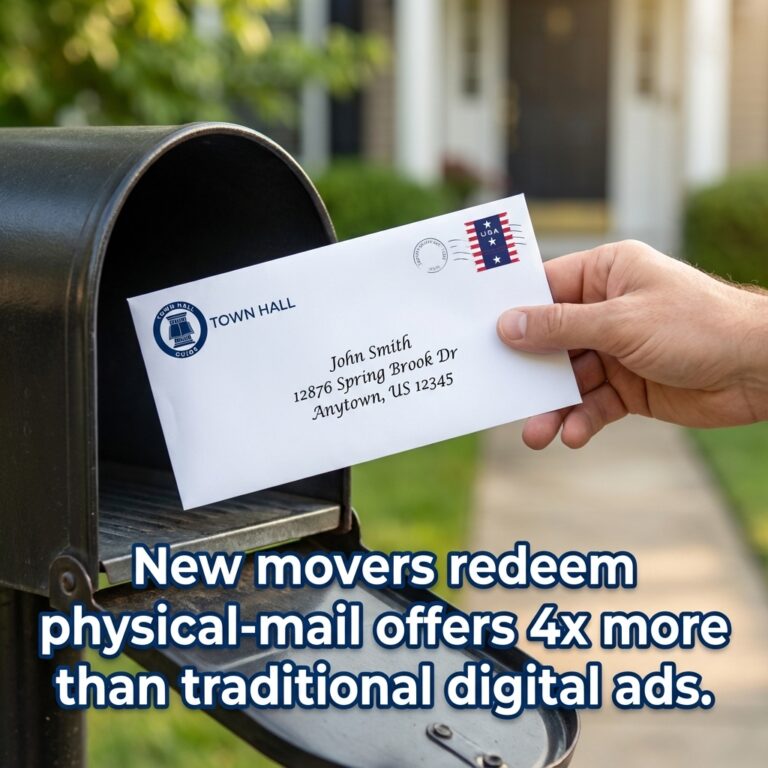
Here’s a stat that should make every local business owner pay attention: 85% of movers will use the first vendor that contacts them. That’s not a typo. The race to win a new homeowner’s loyalty isn’t about having the best price or the flashiest ad, it’s about showing up first.
New movers represent one of the most valuable marketing opportunities out there. They’re actively searching for everything from dentists to dry cleaners, and they’re ready to establish new brand loyalties. But timing is everything. Reach them too early and your message gets lost in the chaos of moving boxes. Wait too long and a competitor has already claimed that customer. So when exactly should you start marketing to new homeowners after they move? Let’s break it down.
Why Timing Matters When Reaching New Homeowners
When someone moves into a new home, they enter what marketers call a “window of opportunity.” This isn’t just industry jargon, it’s backed by compelling data. New movers are 80% more likely to try new businesses and products in the weeks and months following relocation. They’re not just open to change: they’re actively seeking it.
Think about it from their perspective. Every routine is disrupted. The coffee shop they visited every morning? Gone. Their go-to pizza place? Miles away. The mechanic they trusted for years? No longer convenient. New homeowners need to rebuild their entire network of service providers, and they’re doing it all at once.
This transitional stage creates a unique psychological openness. New movers aren’t comparing you to a business they’ve used for a decade, they’re starting fresh. Research shows that new residents establish an average of 71 new business relationships in the first few months in their new community. That’s 71 opportunities for local businesses to earn a loyal customer.
But here’s what makes timing so critical: new movers are five times more likely to become long-term, repeat customers if you reach them first. Miss that window, and you’re not just losing a one-time sale, you’re potentially losing years of customer loyalty to whoever got there before you.
The Best Time Windows to Connect With New Movers
Not all timing is created equal. The first six months after a move represent prime marketing territory, but each phase comes with distinct opportunities and buyer behaviors.
The First 30 Days: Immediate Needs and Quick Wins
The first month is chaos, and that’s exactly why it’s golden for certain businesses. New homeowners are dealing with immediate, pressing needs. They need utilities connected, locks changed, and internet installed. If something breaks (and something always breaks), they’re Googling repair services frantically.
During this period, 93% of new movers take advantage of an offer from a local business that welcomes them to the community. Their mailboxes are relatively empty compared to established residents, making direct mail particularly effective. In fact, 80% of new movers will redeem coupons from merchants before, during, and after the move.
This window is ideal for:
- Home services (plumbers, electricians, HVAC)
- Restaurants and food delivery
- Pet services (veterinarians, groomers)
- Healthcare providers (urgent care, pharmacies)
New movers are also 88% more likely than average consumers to use “near me” searches online. If your digital presence isn’t optimized for local search, you’re invisible during the exact moment they’re looking.
30 to 90 Days: Settling In and Making Improvements
Once the boxes are unpacked and the basics are handled, new homeowners shift focus to making the house feel like home. This is when the big spending really kicks in. Within the first 180 days, new homeowners spend an average of $9,700 on items for their new home, more than the average consumer spends in three years.
The numbers by category are striking:
- Home improvement: 78%
- Furniture: 58%
- Home décor: 52%
- Flooring: 39%
- Bedding and linens: 36%
- Lawn equipment and outdoor tools: 34%
This 30-to-90-day window is prime territory for home improvement stores, furniture retailers, landscapers, interior designers, and home security companies. New homeowners are making decisions about who will help them transform their new house, and they’re spending aggressively to do it.
How to Identify and Reach New Homeowners at the Right Moment
Knowing when to market is only half the battle. You also need to know who just moved and how to reach them effectively.
Traditional methods like tracking property records and utility connections still work, but they can be slow. By the time public records update, weeks may have passed, and competitors may have already made contact. This is where specialized new mover marketing programs become valuable.
At Town Hall, we provide weekly targeted and trackable new resident marketing campaigns that place you in direct contact with new movers when they’re actively establishing purchasing patterns. Our Digital Mover programs represent an industry first, enabling you to reach the exact same custom audience through multiple channels: USPS mail, social media, IP address/display advertising, and email.
Why does multi-channel matter? Because new movers don’t depend on one channel alone when searching for businesses. They might research a service provider online, notice a direct mail piece from another company, and eventually respond to an email offer. The research is clear, the more channels you use to reach new movers, the more new movers you’ll actually reach.
Consider these consumer attitudes from Epsilon research:
- 77% use the internet for move-related information because it’s fastest
- 75% prefer talking to someone in person about complex decisions
- 70% keep move-related information to refer back to later
This means your marketing strategy needs to meet new homeowners wherever they are in their research process. A postcard might introduce your business. A targeted display ad reinforces it. An email with a special offer closes the deal.
Crafting Your New Homeowner Marketing Message
Reaching new homeowners at the right time through the right channels won’t matter if your message falls flat. New mover marketing requires a specific approach that acknowledges their unique situation.
First, welcome them. It sounds simple, but a genuine “welcome to the neighborhood” goes further than you’d think. New movers are often feeling disconnected from community, and businesses that acknowledge their transition create an immediate emotional connection.
Second, make your offer tangible. Remember that 80% coupon redemption rate? New movers respond to concrete value, discounts, freebies, and special rewards for new customers. They’re already spending heavily: give them a reason to spend with you.
Third, reduce friction. New homeowners are overwhelmed with decisions. Make it easy for them to choose you by being clear about what you offer, where you’re located, and how to contact you. Include your website, phone number, and address prominently.
Fourth, consider timing-specific messaging. A carpet cleaning company might emphasize “deep clean before you unpack” in the first week, then shift to “refresh your new home” messaging by month two. A landscaper might lead with basic lawn maintenance early, then pitch design services once the homeowner has had time to evaluate their outdoor space.
Finally, think local. New movers want to get to know their neighborhood. Position yourself as part of the community they’re joining, not just another business chasing their wallet. That authenticity resonates, and it’s why 93% of new movers respond to businesses that take the time to welcome them personally.
Conclusion
The best time to start marketing to new homeowners? Before your competition does. With new mover annual expenditures exceeding $150 billion and the potential for five times greater customer retention when you reach them first, the stakes are too high to wait.
Whether you’re targeting immediate needs in the first 30 days or home improvement spending in the months that follow, showing up at the right moment with the right message across multiple channels is what separates businesses that grow from those that watch customers go elsewhere. The window is open, don’t let it close.
